



Most of the construction industry suffers from punitive diesel prices at the moment, and a lot of infrastructure companies are equally hit.
“Should fuel prices stay elevated, it only underlines our need to continue to work smarter”, says Willy Zhao, who leads the ESG work in BraCom. “We aren’t in the business of delivering theoretical carbon accounting, we ensure that our environmental reporting is closely integrated with operational targets”, Zhao says.

BraCom was a conventional telecom company at its inception in 2019, with large investments in plant. Since then the team has modernised its business model as well as its machinery. Today the company is far less reliant on diesel and similar input costs than before.
Zhao collects and analyses data which tracks environmental impact as part of Scope 1 and Scope 2 reports.
The abbreviations abound in the ESG field: Scope 1 and Scope 2 are definitions for emissions set by the international GHG protocol at the start of this century. Ambitious companies measure this with a level of precision which earn them prestigious certifications like SBTi, a goal BraCom achieved last year.
What’s the labour component to collect such data?
“At the start this consumed a lot of hours! We built the accounting structure from the bottom up to get a handle on what is actually measured. That was labour-intensive. Now the data are pulled in from operational systems, so that ESG has become an integral part of how we work. It’s not something we deliver post-fact just to hand over an environmental report.”
What are the biggest changes to your business model which set you free from rising diesel costs?
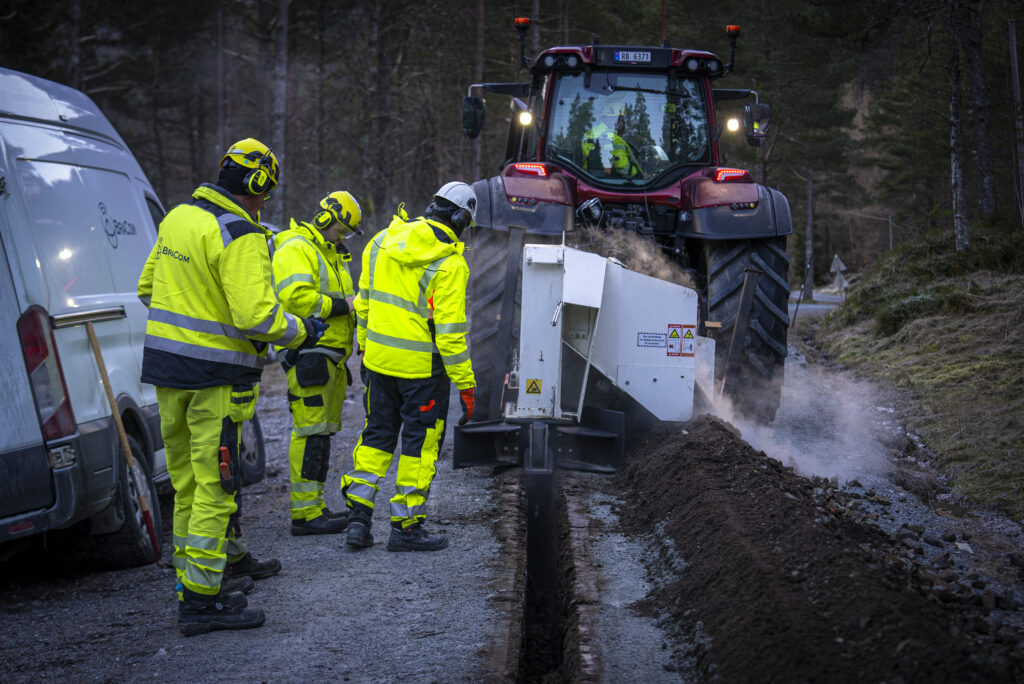
“At the outset, a lot of capital was tied up in plant. We’ve effected that change consciously. Today our business model is project management, steering the production, choose the right methods and being smart about subcontracting. We work harder to utilise smaller plant and more efficient solutions. That’s why we’re less dependent on fuel costs.”
What’s been the operational gains in your greenhouse emissions cuts, meaning rationalisation gains over business model adaptation?
“This sounds simple, but it does require strong management: The right equipment for the right task, smarter planning and fewer wasted journeys. Environmental and financial gains overlap. We have also focused on alternative methods to full asphalting. That lowers emissions and costs – another win-win.”
How is BraCom affected if the high energy prices last throughout 2026?
“We do notice, but it doesn’t dictate our profitability. We’ve taken so many steps to lower our dependence on diesel. If the prices remain high, it only underscores our need to continue to work smarter.”
How is the work progressing to compile Scope 3 data, as defined by the international GHG protocol?
“Scope 3 covers the whole value chain, so you can imagine it’s demanding. We have the foundations in place, and we use estimates where we have to as we work towards continuously improving data quality. We want a valuable, operational data set, not greenwashing.”
How much insight do you have in your subcontractors’ emissions?
“Our suppliers are important to us, and we work closely with them. We cover areas like work conditions and financial robustness. We’re increasingly systematic.”
Zhao says that robustness in the face of an individual input cost like diesel, reflects general robustness.
“For Bracom, the priority hasn’t been securing labels like SBTi, but to build a more robust company. Combining data quality with more conscious operational choices yield lower emissions and better cost and risk management. That way we’re better positioned to handle market volatility, whether it’s fuel costs, demand or supplier capacity”, says Zhao.

Call us+47 67 80 00 01

Visit usMaridalsveien 323B, 0872 Oslo - Norway

Write to usleveranse@bracom.com