



“Sustainability is a priority for us because it creates business value,” says BraCom CEO Erling-Geir Iversen of their ESG strategy for 2026. Iversen and his team at the Norwegian infrastructure company have drawn up their 2026 plans for ESG – or environmental, social and governance objectives.
“Traditional ESG goals also create financial value,” Iversen states. “It takes time to establish ESG as a competitive advantage, but fortunately there are bottom-line gains.”
Project Manager Sinthur Ponnuthurai recently presented the ambitious ESG plan for the Norwegian infrastructure company. He elaborates:
“When we set sensible ESG targets, we reduce operational risk, we improve project execution and delivery precision, and we strengthen our margins.”
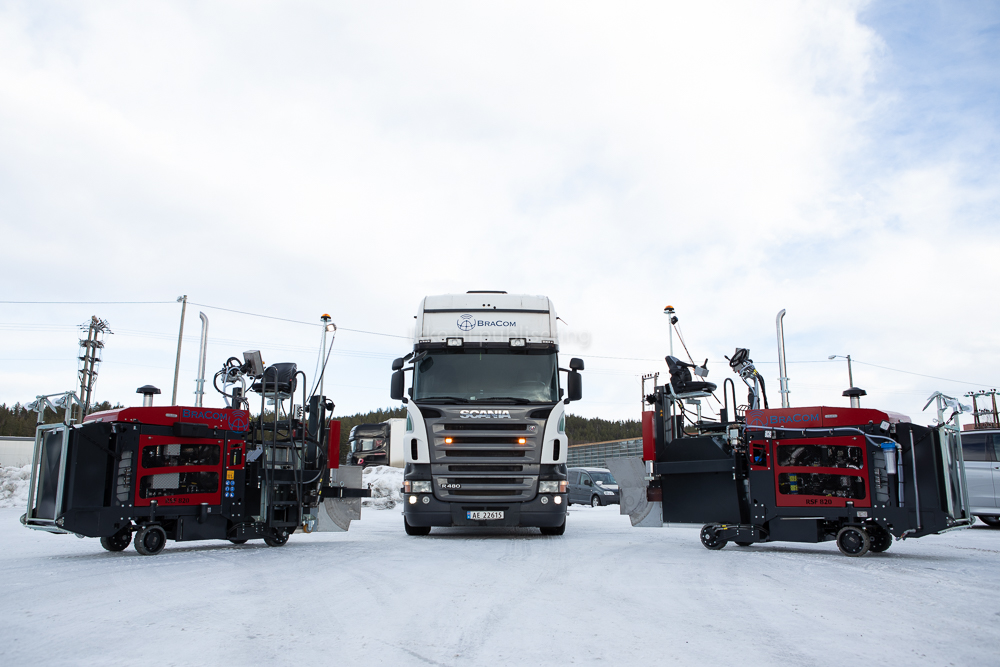
Several supplier requirements are international and enshrined in the SBTI certification. But BraCom goes further. They are experts in Norway in micro-trenching, which is environmentally friendly because it minimises ground disturbance, and because bituminous jointing of ultra-narrow trenches is less costly than extensive asphalting.
“Dialogue with the authorities and smart design help us reduce the amount of asphalt needed in network expansion,” says Ponnuthurai. “We are also proactive with subcontractors, who can be too quick to choose the machinery that is most readily available to them. Through better management, we can more frequently use smaller machines that are transported on flatbed lorries, resulting in lower overall CO2 emissions.”
The choice of machinery must be optimised for transport to and from the construction site.
“Errors in management and resource coordination have costly consequences, such as wasted journeys,” explains Ponnuthurai. “Environmental and margin gains overlap,” he states.
Whilst automation and new software optimise this work, safety rounds and inspections of subcontractors remain an important vertical tool.

“It is important that BraCom stands by our ESG choices in the tender process and in customer dialogue,” says Iversen. “We want a reputation as best in class, and we perform best when the customer is on board with the goals.”
BraCom delivers fibre in scenic surroundings such as Vågåvatnet in Lom municipality.
The industry is mindful of the EU’s Scope 3 targets for indirect emissions in its own value chain, which are currently voluntary to report. “We automate data collection using established tools such as Power BI,” explains Ponnuthurai. “When we improve our Scope 3 targets through effective management of subcontractors, the overall benefit for BraCom is greatest.”
“We have always emphasised transparency,” elaborates Iversen. “We share verifiable data whenever the analysis tools allow it. Be it emissions per project, the proportion of electric vehicles, recycling rates or HSE key figures. 2026 will be an exciting year in which we combine increasingly sustainable methodologies with margin improvements,” says the BraCom CEO.
Amidst technological improvements, Iversen does not forget that motivated employees provide the best boost for achieving financial and environmental goals. “BraCom aims to be the employer of choice in the industry,” says Iversen. “Plain and simple.”

Call us+47 67 80 00 01

Visit usMaridalsveien 323B, 0872 Oslo - Norway

Write to usleveranse@bracom.com